Home/Cards/Combinations
Tarot Combinations

Death & Ten of Swords

Read how these two cards modify each other when they appear in the same spread.

endingculminationtransition meets legacy
Death
+
Ten of Swords
Death

ending + transition

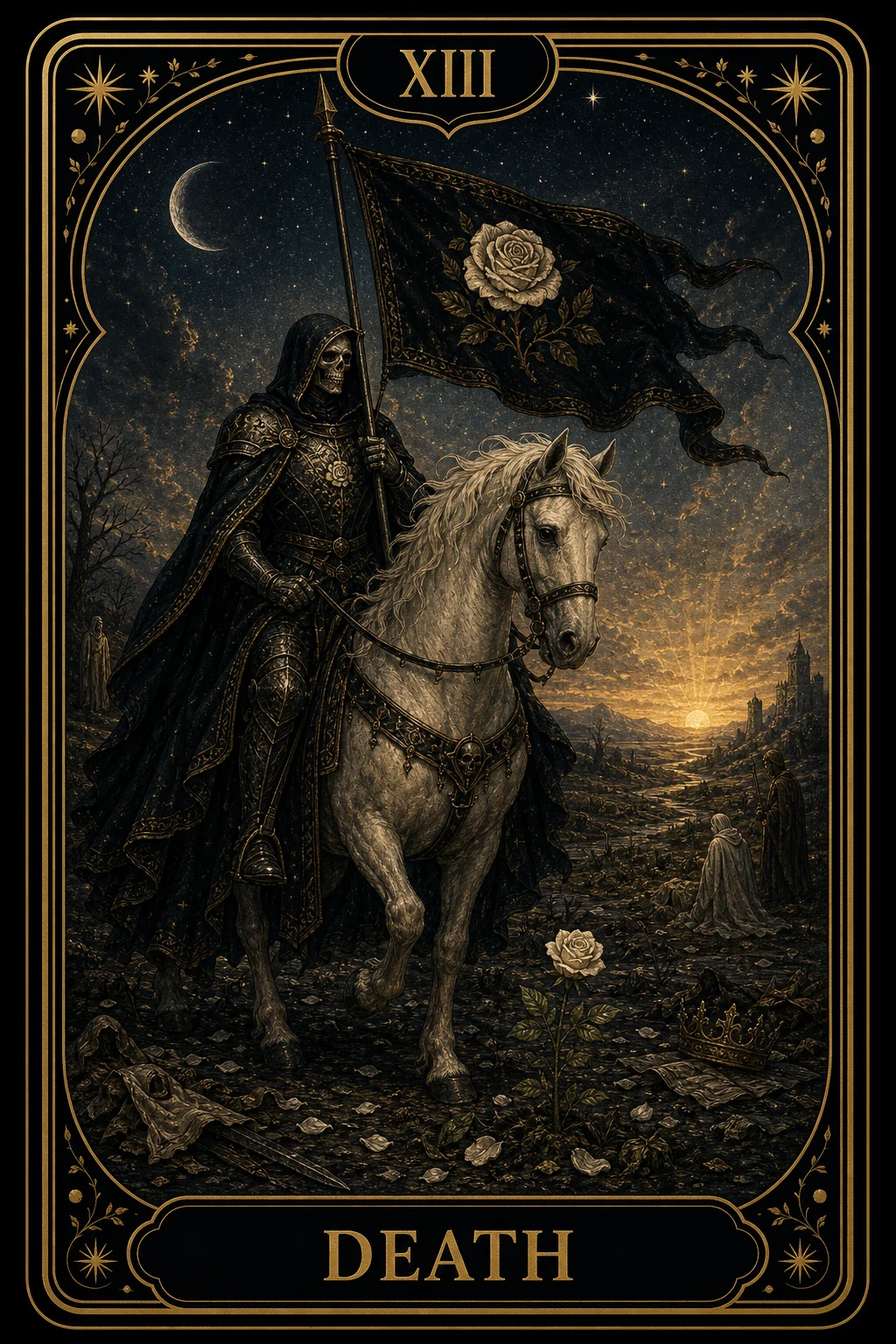
Death is the card of necessary endings. Upright, it does not predict disaster so much as irreversible change: the part of life where an old identity, attachment, or structure can no longer continue in its present form. The transformation may be chosen or imposed, but either way it asks for cooperation with reality rather than nostalgia for what has already finished. At its core, Death is about ending, release, and irreversible transformation.

Ten of Swords

culmination + legacy

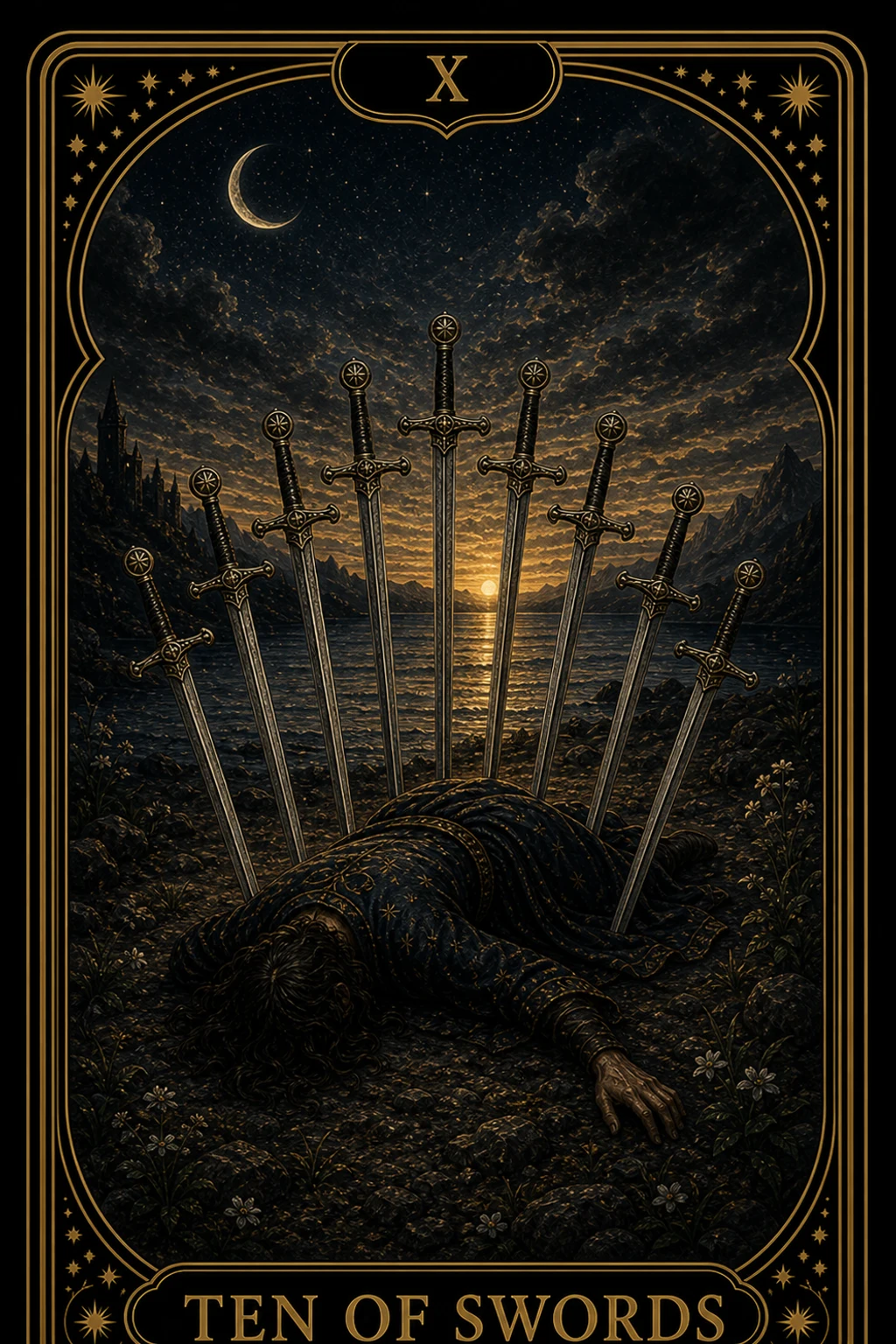
Ten of Swords works through thought, language, truth, conflict, and decision-making. As a Ten, the suit reaches fullness. That fullness may look like abundance, closure, overload, or the need to hand something on before it becomes too heavy. More specifically, Ten of Swords points to an ending so complete that denial no longer helps. In practice, upright Ten of Swords favors clarity, precision, and discernment, but in this card that gift is expressed through burned-out cycles ending, layoffs, or clear professional dead ends. It helps when you need to move the situation through the air element in a cleaner way: with enough intention to make the energy useful, and enough self-awareness to stop it from turning into overthinking, harshness, and mental fragmentation.
Combined Reading

How The Pair Speaks Together

The pairing of Death with Ten of Swords shows how a massive life theme anchors into a specific, daily reality. The gravitational pull of Death dictates the overarching lesson, while Ten of Swords shows exactly how this energy will manifest in your immediate actions or feelings.

At its core, Death advises you to embrace transition and release. When you introduce Ten of Swords into this field, you are forced to synthesize that approach with legacy. If you attempt to lean entirely on the energy of Death while ignoring the demands of Ten of Swords, you risk falling into the shadow expression of the situation—experiencing clinging paired with release.

In practical terms, this combination suggests a specific path forward. Death carries a no signal, while Ten of Swords adds a maybe signal that modifies the answer. Start with Death's symbolic field: The skeletal imagery strips life down to what cannot be negotiated away: impermanence. Then read that through Ten of Swords' lived context: Ten of Swords works through thought, language, truth, conflict, and decision-making. Together, they demand a balanced view rather than an extreme reaction.

Read DeathRead Ten of Swords