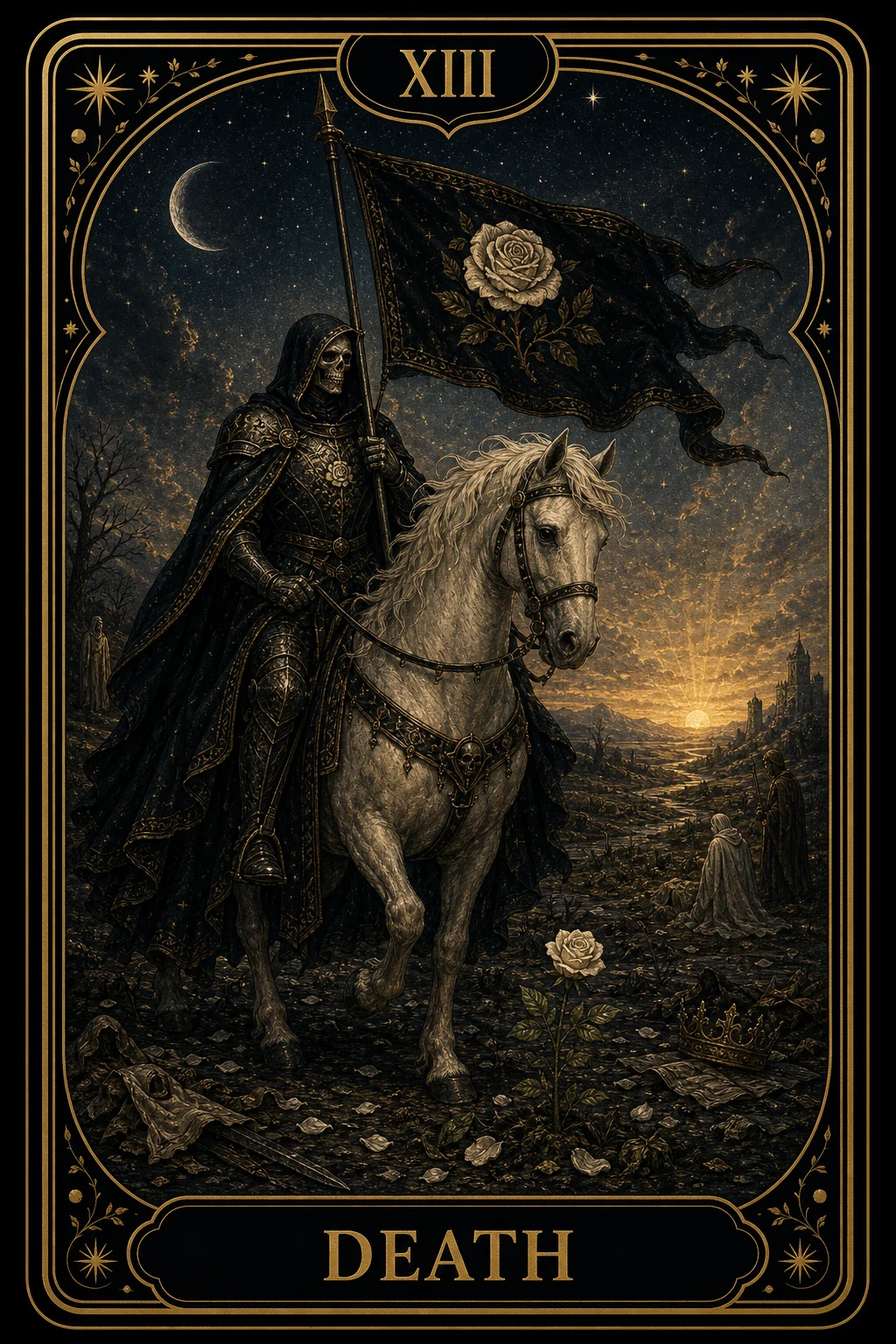
Deathending + transition
Death is the card of necessary endings. Upright, it does not predict disaster so much as irreversible change: the part of life where an old identity, attachment, or structure can no longer continue in its present form. The transformation may be chosen or imposed, but either way it asks for cooperation with reality rather than nostalgia for what has already finished. At its core, Death is about ending, release, and irreversible transformation.
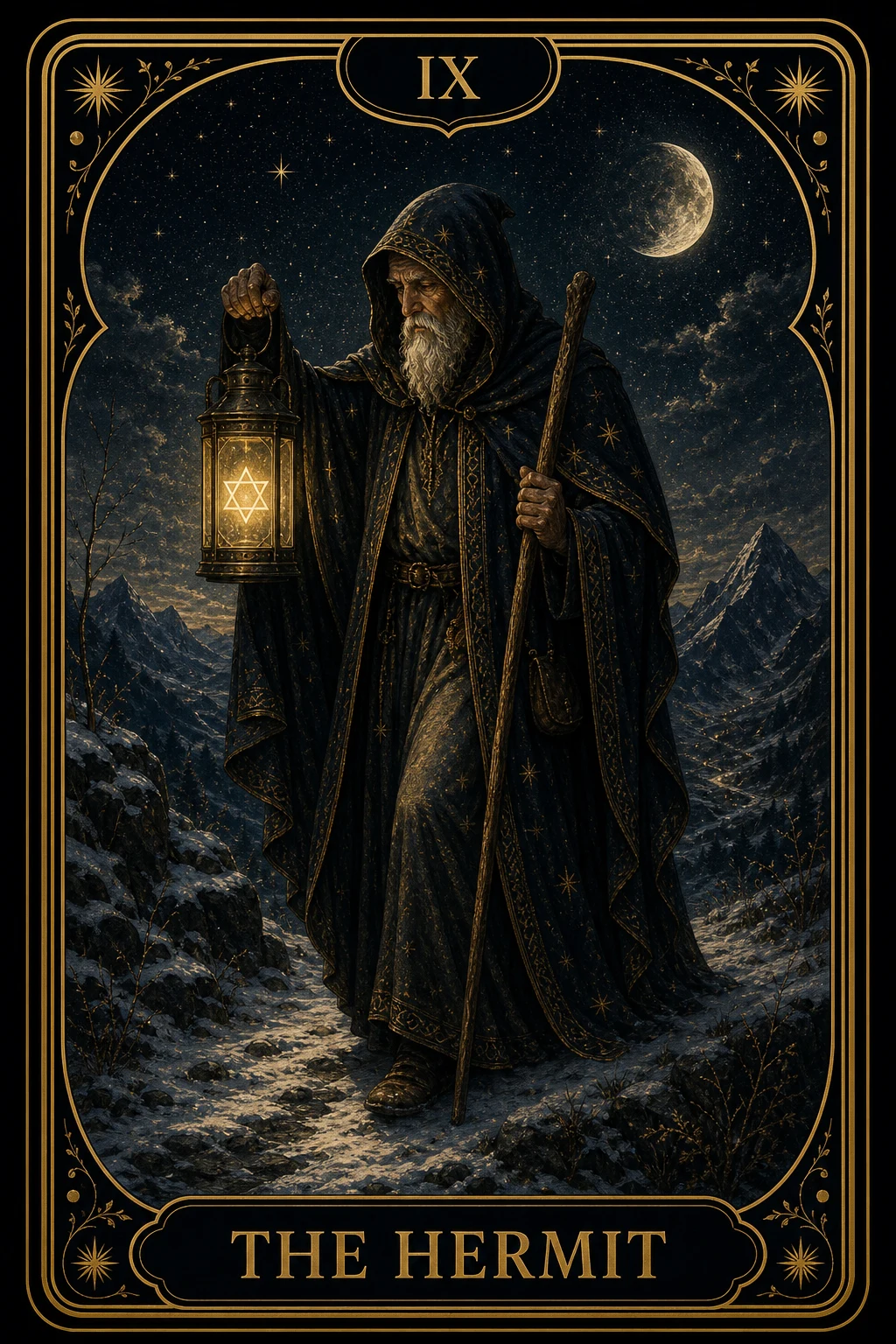
The Hermitwithdrawal + clarity
The Hermit invites strategic withdrawal so that thought can deepen and truth can separate itself from social noise. Upright, it favors reflection, research, spiritual practice, and the kind of solitude that clarifies rather than numbs. The card often appears when external pace must slow down for internal alignment to catch up. At its core, The Hermit is about solitude, reflection, and earned wisdom.
When Death and The Hermit appear together, the reading shifts entirely into the realm of major life structures. This is not a passing mood or minor event; it represents a profound intersection of archetypal forces. Death brings the theme of ending, which is immediately challenged and expanded by The Hermit's aura of withdrawal.
At its core, Death advises you to embrace transition and release. When you introduce The Hermit into this field, you are forced to synthesize that approach with clarity. If you attempt to lean entirely on the energy of Death while ignoring the demands of The Hermit, you risk falling into the shadow expression of the situation—experiencing clinging paired with isolation.
In practical terms, this combination suggests a specific path forward. Death carries a no signal, while The Hermit adds a yes signal that modifies the answer. Start with Death's symbolic field: The skeletal imagery strips life down to what cannot be negotiated away: impermanence. Then read that through The Hermit's lived context: The Hermit invites strategic withdrawal so that thought can deepen and truth can separate itself from social noise. Together, they demand a balanced view rather than an extreme reaction.