Does having The Tower mean something bad will happen?
No. The calculation cannot predict events. You can use The Tower to review assumptions in a calm period, including checking whether a commitment still has the support it needs.
The Tower and The Chariot are the 16/7 birth cards, a pairing of disrupted assumptions and deliberate direction. The Tower invites an honest look at what a plan depends on. The Chariot asks what you can steer after that review. Use their tension to examine how you respond when certainty gives way to a choice.
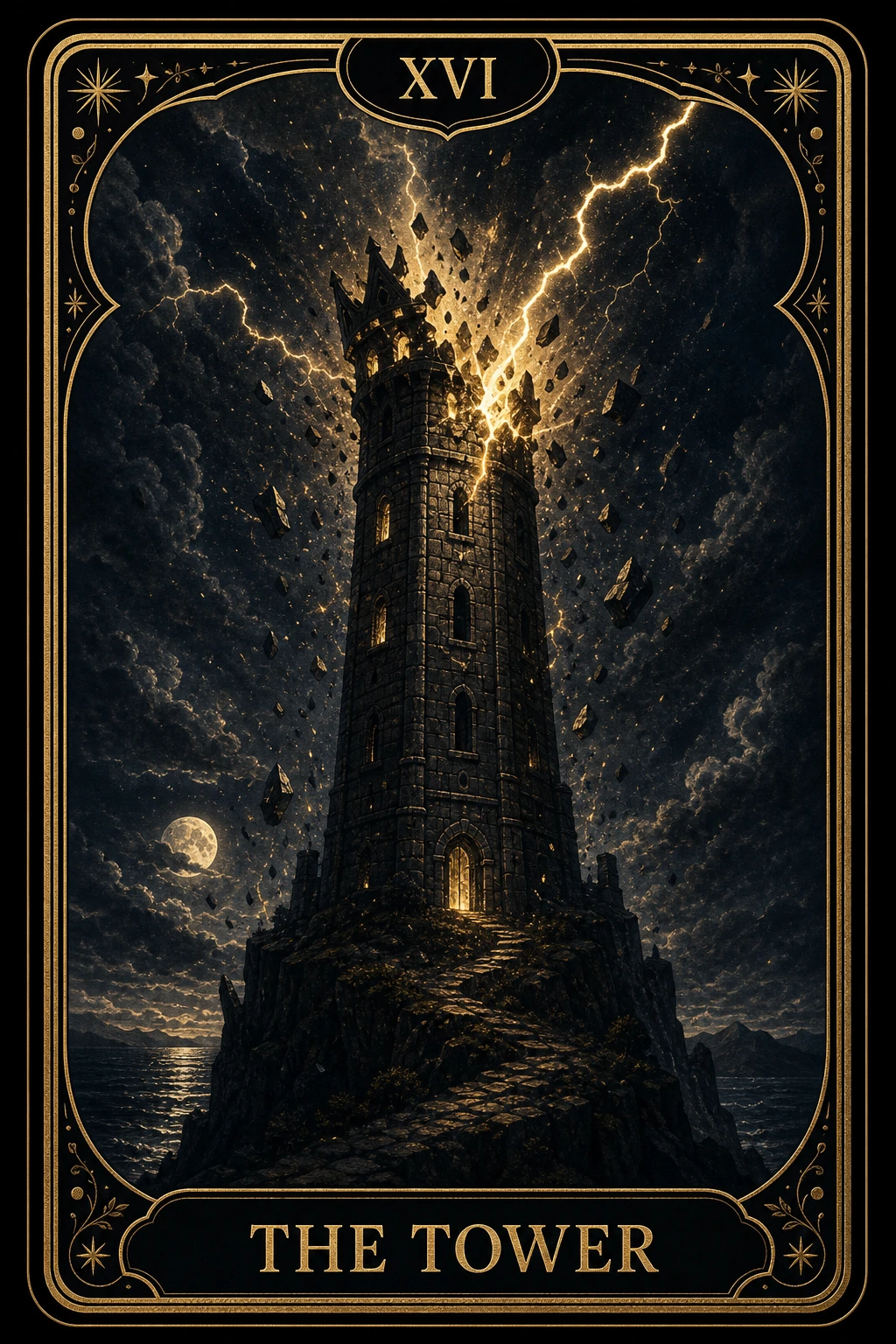
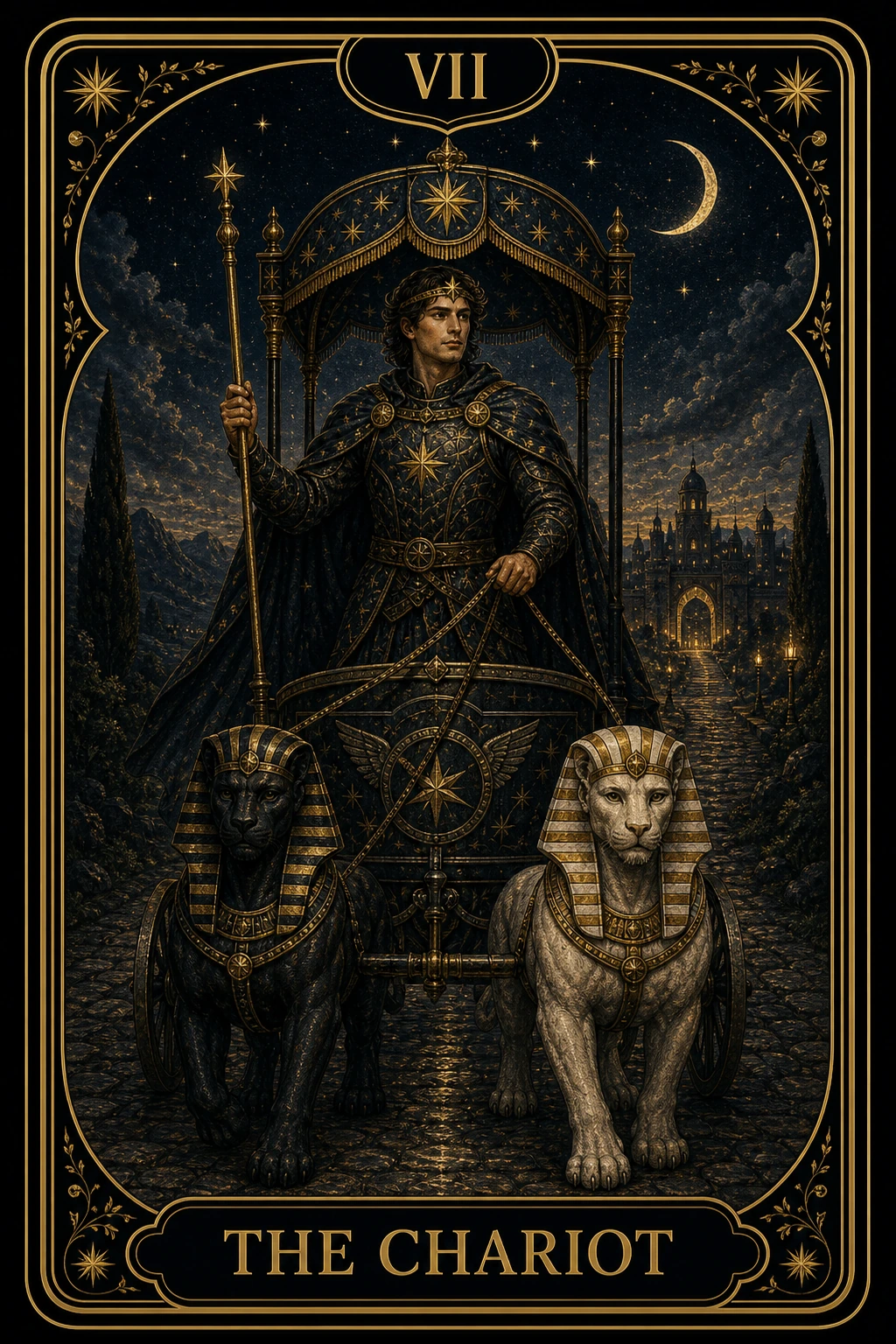
February 5, 1962: 02 + 05 + 19 + 62 = 88; 8 + 8 = 16; 1 + 6 = 7.
Check this birthday in the calculatorIf your grouped birthday calculation produces 16, The Tower is the first card and The Chariot is the second. The February example above reaches 16 before reducing to 7. A birthday that reduces straight to 7 also belongs here, because 16 is its implied partner. This calculation is a convention for choosing symbols to study. Two people with this pair can have very different lives, temperaments, and ways of handling pressure.
The Tower can make this pairing sound alarming. Look closely at the image, though: the lightning strikes a structure that had appeared solid. As a reflection card, it brings attention to the difference between stability and an assumption nobody has questioned. You might examine a rule you inherited, an explanation you repeat, or a role that no longer fits your actual responsibilities. The card gives you a subject to investigate; it cannot tell you that a disaster is approaching.
An ordinary Tower exercise is to finish the sentence, “This plan only works if…” List the conditions without judging yourself for needing them. Perhaps a deadline depends on someone answering, or a friendship depends on never voicing disagreement. Once those dependencies are visible, you can check them. Honesty can happen through a quiet conversation or a small revision. There is no need to manufacture upheaval to make the symbolism feel relevant.
The Chariot turns attention toward direction, effort, and the demands of steering. Its paired figures pull the eye toward forces that must be held together. In everyday reflection, those forces might be ambition and rest, loyalty and independence, or two commitments competing for the same afternoon. Ask what destination you have chosen and which competing demands need a clear boundary. Movement becomes easier to assess when you can name where you intend to go.
The difficult side of this card is treating control as the answer to every uncertainty. You can organize your next action without controlling another person’s response. You can set a pace without making every delay a personal failure. A useful Chariot note includes one decision you own and one condition you need to observe. That distinction makes determination more workable, especially after something has challenged your confidence.
Read the pair as a conversation between revising the map and choosing a route. The Tower questions the structure; The Chariot asks how you will respond with the information available. If you rush straight to action, you may rebuild around the same unsupported belief. If you stay absorbed in what went wrong, every possible next step can start to look unsafe. The pair offers a way to pause between those habits.
For a practical journal entry, choose one plan that recently changed. Describe the assumption the change exposed, using only details you can check. Then choose a modest action that still makes sense under the new conditions. If a project lost a collaborator, that action might be reducing its scope before promising another deadline. Revisit the entry after taking the action. What became clearer, and what still needs discussion?
In this calculator, The Tower (16) is called the Personality Card and The Chariot (7) the Soul Card. Personality names the more visible pattern you can examine: what happens when your expectations meet an inconvenient truth? Soul names the quieter practice underneath: how do you choose and sustain a direction? These are reading roles, not a psychological assessment. You may recognize one role more easily than the other, and your interpretation can change as your circumstances change.
No. The calculation cannot predict events. You can use The Tower to review assumptions in a calm period, including checking whether a commitment still has the support it needs.
When the calculation ends at 7, Tarot School supplies 16 as the implied partner. We display the higher-numbered card first, so the pair remains The Tower and The Chariot regardless of the calculation route.
Choose one concrete situation and one question: what changed, and what can I steer now? Stop after identifying an action small enough to review. You do not need to reinterpret every setback through these cards.