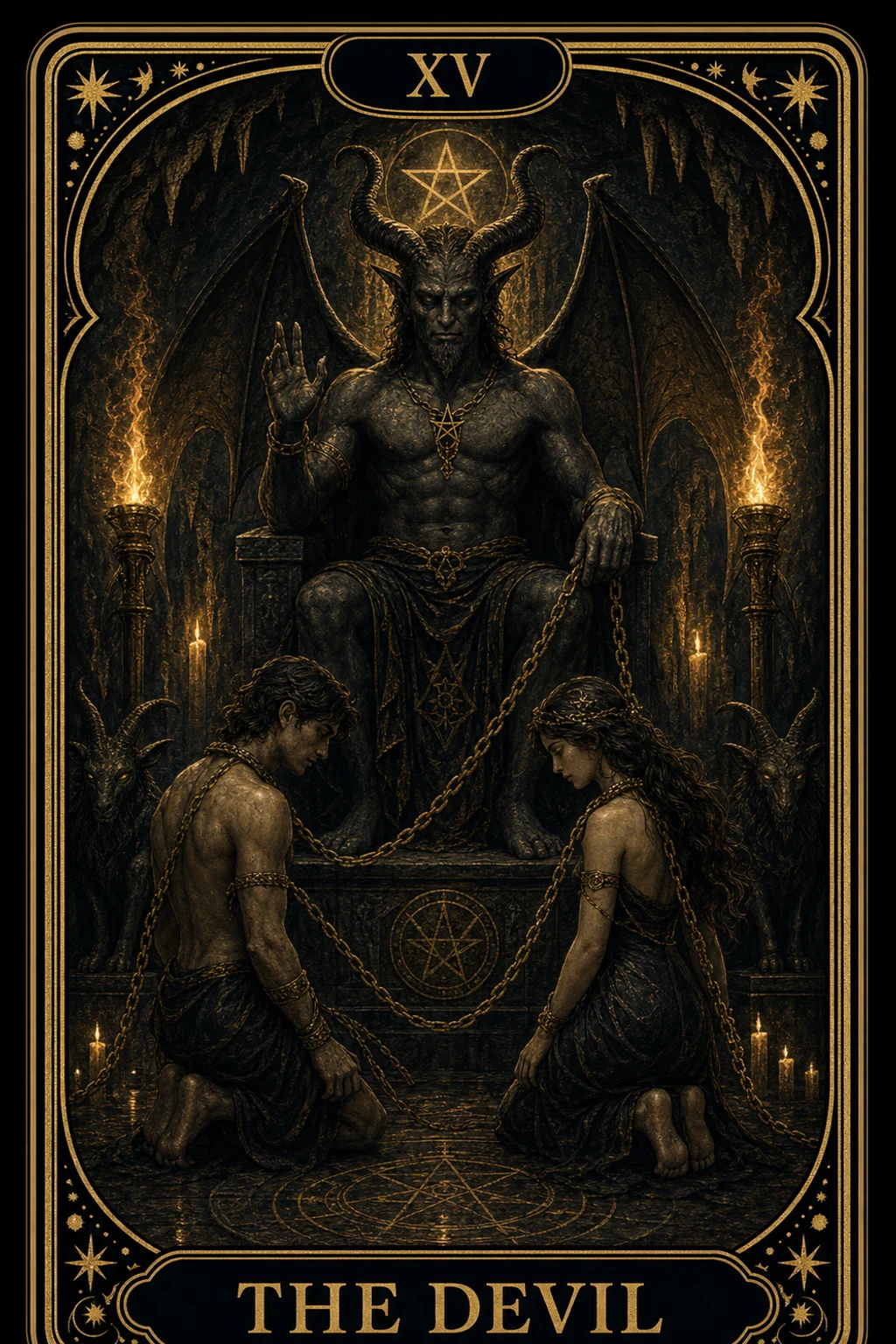
The Devilattachment + temptation
The Devil names what has leverage over you. Upright, it points to compulsive patterns, seductive agreements, or forms of dependency that promise relief while narrowing freedom. This card is not moralistic. It is diagnostic. It asks what desire is trying to solve, what cost is being hidden, and why the familiar trap still feels easier than honest responsibility. At its core, The Devil is about attachment, compulsion, and the truth about desire.
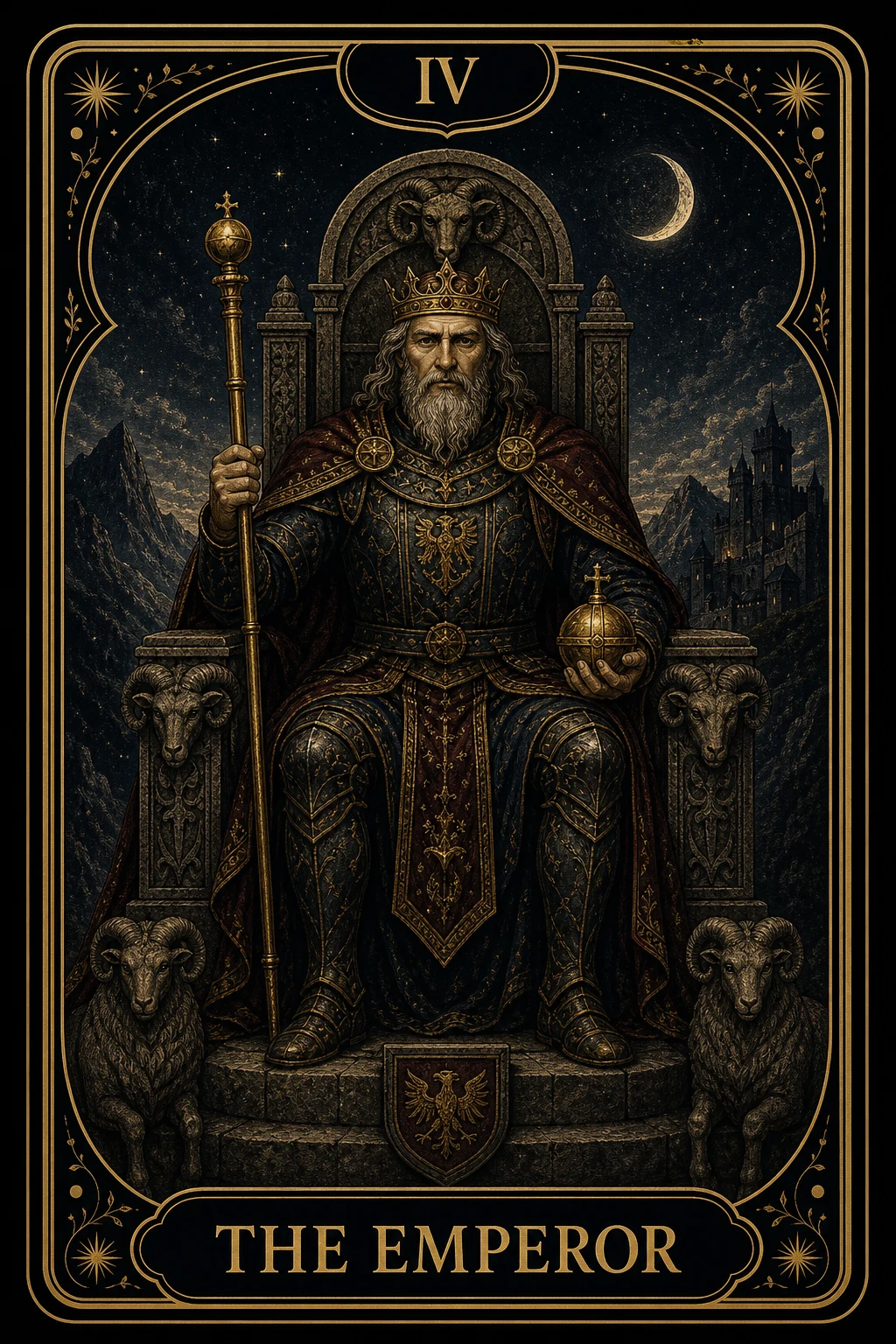
The Emperororder + leadership
The Emperor represents structure that protects rather than suffocates. Upright, he appears when clear decisions, strong boundaries, and long-range planning are required. This card favors mature authority: taking ownership of consequences, organizing complexity, and making systems dependable enough that others can trust them. At its core, The Emperor is about structure, authority, and responsible direction.
When The Devil and The Emperor appear together, the reading shifts entirely into the realm of major life structures. This is not a passing mood or minor event; it represents a profound intersection of archetypal forces. The Devil brings the theme of attachment, which is immediately challenged and expanded by The Emperor's aura of order.
At its core, The Devil advises you to embrace temptation and shadow. When you introduce The Emperor into this field, you are forced to synthesize that approach with leadership. If you attempt to lean entirely on the energy of The Devil while ignoring the demands of The Emperor, you risk falling into the shadow expression of the situation—experiencing release paired with rigidity.
In practical terms, this combination suggests a specific path forward. The Devil carries a yes signal, while The Emperor adds a yes signal that modifies the answer. Start with The Devil's symbolic field: Chains, shadowed figures, and seductive imagery symbolize bondage maintained not only by force but by consent and habit. Then read that through The Emperor's lived context: The Emperor represents structure that protects rather than suffocates. Together, they demand a balanced view rather than an extreme reaction.